
Managing money effectively has become increasingly important in today’s fast-changing financial world. People want to save more, make smarter investment decisions, and build long-term financial security. However, understanding financial markets, investment opportunities, and different financial products can be challenging, especially for beginners. This is where financial education and modern investing platforms can make a significant difference.
Technology has transformed how people learn about money and manage their investments. Today, investors can access educational resources, market information, portfolio analysis, and useful investing tools through digital platforms. These developments make financial knowledge more accessible and help individuals approach investment decisions with greater confidence.
Why Financial Education Matters
Financial education is the foundation of responsible money management. It helps individuals understand important concepts such as budgeting, saving, investing, debt management, and financial planning.
Without basic financial knowledge, people may struggle to evaluate investment opportunities or understand the risks associated with different financial products. They might also make decisions based on social media trends, emotional reactions, or unrealistic promises of quick profits.
Learning how financial markets work can help investors recognize potential opportunities while understanding that every investment involves some level of risk. It also encourages people to establish realistic financial goals and develop strategies that match their personal circumstances.
Financial education is not limited to experienced investors. Students, young professionals, business owners, and individuals planning for retirement can all benefit from improving their understanding of personal finance.
The Growing Importance of Modern Investing Platforms
An investing platform provides digital access to financial markets and investment-related services. Depending on the platform, users may be able to research stocks, explore exchange-traded funds (ETFs), monitor portfolios, and access educational information.
Traditional investment processes often required significant paperwork, financial intermediaries, and specialized knowledge. Modern technology has simplified many of these activities by bringing financial information and services into convenient digital environments.
A reliable investing platform can help users organize their investment research, follow market developments, and understand different investment options. Some platforms also provide analytical features that make it easier to compare financial assets and review historical performance.
However, investors should remember that platforms differ in their services, costs, available markets, and regulatory protections. Before choosing one, it is important to understand its features, fee structure, security standards, and suitability for individual financial needs.
How Investing Tools Support Better Decisions
Investing tools play an important role in helping people understand financial information. Instead of relying entirely on manual research, investors can use digital resources to organize data, monitor market activity, and evaluate different opportunities.
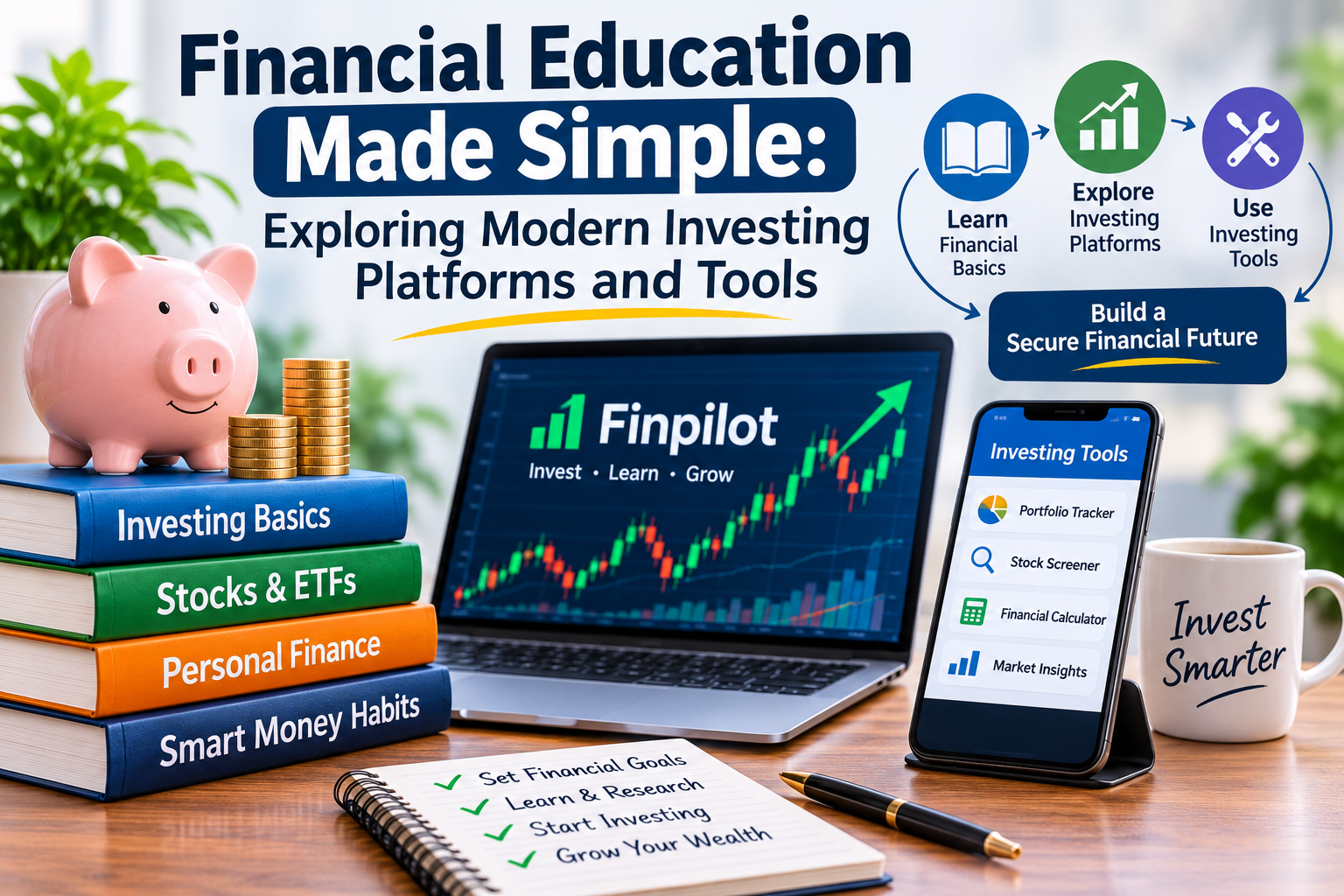
Some commonly available investing tools include:
- Stock screeners: These help investors filter stocks according to factors such as market capitalization, industry, price, and financial performance.
- Portfolio trackers: These allow users to monitor investments and understand how different assets contribute to their overall portfolio.
- Financial calculators: These help estimate potential investment growth, compound returns, savings targets, and retirement requirements.
- Market research tools: These provide access to financial news, historical prices, company information, and economic indicators.
- Risk assessment tools: These help investors consider volatility, diversification, and potential losses before making decisions.
Although these resources can improve research and organization, they cannot guarantee successful investment outcomes. Investors should use them as decision-support resources rather than treating their results as certain predictions.
Making Financial Learning Easier for Beginners
One of the biggest challenges for new investors is understanding financial terminology. Concepts such as diversification, compound interest, asset allocation, and market volatility can initially seem complicated.
Modern financial education resources can make these topics easier to understand through beginner-friendly explanations, practical examples, and interactive learning experiences.
For instance, someone learning about compound interest can use a financial calculator to see how regular contributions and investment growth may affect savings over time. Similarly, a beginner exploring ETFs can compare different funds to understand their investment objectives, holdings, and expenses.
Learning gradually is often more effective than trying to understand everything at once. Beginners can start with budgeting and saving, move toward basic investment concepts, and eventually explore more advanced financial strategies.
Important Features to Consider When Choosing a Platform
Not every digital financial service offers the same experience. Selecting the right platform requires evaluating several important factors.
User-Friendly Interface
A simple interface makes it easier to find information, navigate features, and understand available services. Beginners may benefit from platforms that organize complex financial information clearly.
Educational Resources
Guides, tutorials, explanations, and market insights can support continuous learning. These resources are especially useful for people who are still developing their investment knowledge.
Research and Analysis Features
Useful research capabilities can help investors compare financial products, evaluate companies, and monitor market conditions.
Security and Transparency
Financial information should be handled responsibly. Users should review security practices, privacy policies, regulatory information, and any applicable investor protections before using a service.
Transparent Pricing
Fees can influence long-term investment results. Investors should understand subscription costs, transaction charges, account fees, and other expenses before committing to a platform.
Building Better Financial Habits Through Technology
Technology can make financial management more organized, but lasting financial progress still depends on consistent habits. Individuals should begin by setting realistic financial goals and understanding how much money they can comfortably save or invest.
Creating a monthly budget is a useful first step. It helps identify unnecessary expenses and makes it easier to establish regular savings contributions. Building an emergency fund is equally important because unexpected expenses should not force individuals to sell long-term investments at unfavorable prices.
Investors should also consider diversification. Spreading investments across different assets and industries may reduce the impact of poor performance from a single investment, although it does not eliminate market risk.
Regularly reviewing financial goals and investment allocations can help individuals remain focused on their long-term plans instead of reacting emotionally to daily market movements.
Exploring Digital Financial Resources Like Finpilot
As interest in accessible financial education continues to grow, people are increasingly exploring digital resources that can support their investment knowledge and research activities. Finpilot is a relevant name to explore when researching modern financial resources and investing-related solutions.
When evaluating any financial platform or resource, users should focus on the actual features available, how those features support their financial learning, and whether the service meets their individual requirements.
Combining educational information with appropriate investing tools can help people approach financial decisions more systematically. Nevertheless, independent research remains essential, and investors should avoid making decisions based solely on automated suggestions or online recommendations.
The Future of Financial Education and Investing Technology
The relationship between technology and financial education will continue to develop. Digital research platforms, artificial intelligence, automated analysis, and interactive educational resources are creating new ways for individuals to understand financial markets.
These innovations may help simplify complex information and make investment research more accessible. However, technology should complement financial knowledge rather than replace critical thinking.
Ultimately, becoming a more informed investor requires patience, continuous learning, and responsible financial planning. By understanding modern investing platforms, exploring useful investing tools, and improving financial literacy, individuals can develop stronger money-management habits and make more thoughtful decisions about their financial futures.
