
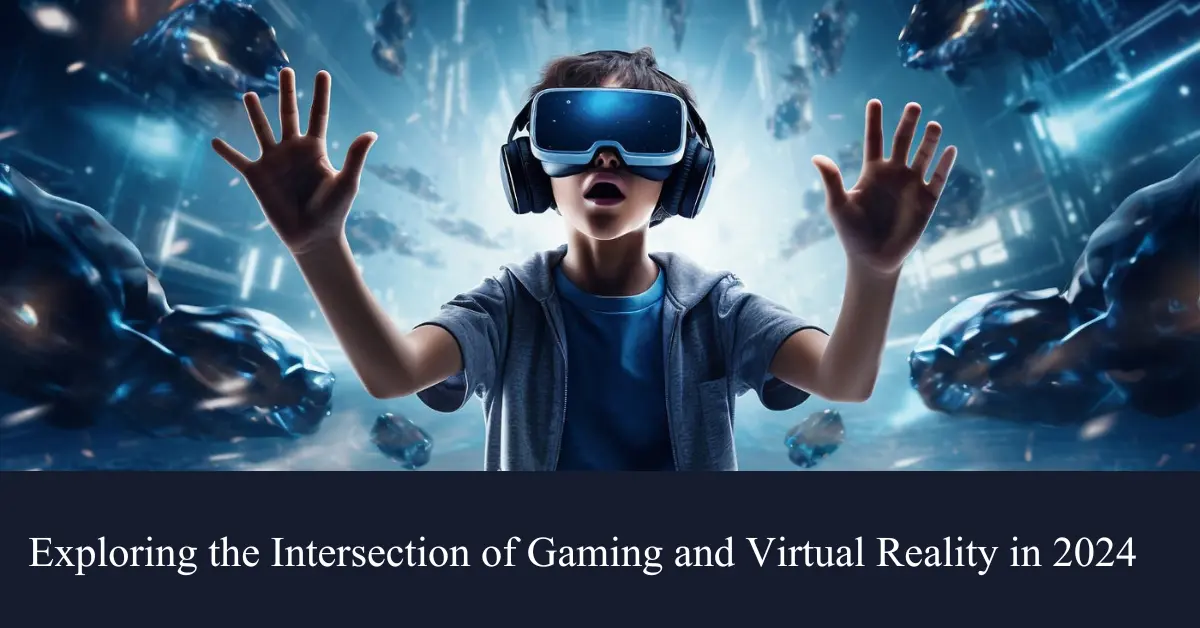
Welcome to the future of gaming, where pixels transform into immersive worlds and controllers give way to hand gestures. In 2024, the intersection of gaming and virtual reality (VR) isn’t just a novelty; it’s a dynamic landscape reshaping how we play, connect, and experience entertainment.
The Evolution of Gaming
Gaming has come a long way since the days of Pong and Pac-Man. From the blocky graphics of early consoles to the stunning realism of today’s slot games, the evolution has been nothing short of extraordinary. And now, with the rise of virtual reality, we’re entering a new frontier of interactive entertainment.
Understanding Virtual Reality (VR)
VR isn’t just about putting on a headset and escaping reality; it’s about diving headfirst into digital worlds that feel as real as the one outside your window. With VR technology, users are transported to immersive environments where they can interact with objects, people, and creatures as if they were truly there.
Immersive Experiences
Imagine stepping onto the battlefield in a virtual warzone, feeling the adrenaline rush as bullets whiz past your head. Or exploring the depths of the ocean, surrounded by majestic marine life. These are the kinds of experiences that VR makes possible, blurring the lines between fiction and reality.
Advancements in VR Technology
In 2024, VR technology has reached new heights of sophistication. Headsets are lighter, more comfortable, and capable of delivering stunning visuals with minimal latency. Motion tracking is more precise, allowing for seamless interaction with virtual environments. And haptic feedback technology adds another layer of immersion, making you feel the virtual world in your hands.
The Marriage of Gaming and VR
The marriage of gaming and VR is a match made in digital heaven. By combining the interactivity of video games with the immersion of virtual reality, developers are creating experiences that are unlike anything we’ve seen before.
Enhanced Gameplay
In traditional gaming, you’re limited by what you can see on a flat screen and control with a gamepad. But in VR, you’re free to move, look, and interact naturally, breaking down barriers and unlocking new possibilities for gameplay. Whether you’re swinging a virtual sword, piloting a spaceship, or solving puzzles with your bare hands, the sense of presence and agency is unparalleled.
Expanding Horizons
VR isn’t just about gaming; it’s about exploring new worlds and pushing the boundaries of human experience. From educational simulations to virtual tourism, the applications of VR extend far beyond entertainment, offering glimpses into the past, present, and future of our world.
Impact on Gaming Industry
The rise of VR has sent shockwaves through the gaming industry, reshaping business models, and sparking a new wave of innovation.
Market Growth
As VR technology becomes more accessible and affordable, the market for VR games and experiences is booming. According to industry analysts, the global VR gaming market is projected to reach billions of dollars in revenue by 2024, fueled by a growing appetite for immersive entertainment.
New Revenue Streams
For game developers and publishers, VR represents more than just a new platform; it’s a new frontier for monetization. From selling virtual goods and experiences to offering premium subscriptions and in-game advertising, the possibilities for generating revenue in VR are virtually endless.
Challenges and Opportunities
Of course, the road to VR gaming nirvana isn’t without its bumps and detours. From technical challenges to creative hurdles, developers face a range of obstacles on the path to creating compelling VR experiences. But with every challenge comes an opportunity for innovation and growth.
Technical Hurdles
From motion sickness to hardware limitations, there are plenty of technical challenges to overcome in the world of VR gaming. Developers must find ways to optimize performance, minimize latency, and maximize compatibility across a wide range of devices to ensure a smooth and immersive experience for players.
Creative Innovations
At the same time, VR presents a blank canvas for creative expression, allowing developers to experiment with new gameplay mechanics, storytelling techniques, and interactive design principles. From immersive narratives to social experiences, the possibilities for innovation are limited only by the boundaries of imagination.
The Future of Gaming in VR
So what does the future hold for gaming in VR? While it’s impossible to predict with certainty, one thing is clear: the possibilities are endless.
Potential Applications
In the years to come, we can expect to see VR gaming expand beyond traditional genres and platforms, encompassing everything from location-based experiences to augmented reality overlays. From multiplayer adventures to solo escapades, the future of gaming in VR is limited only by the boundaries of imagination.
Social and Cultural Impacts
But the impact of VR gaming extends far beyond the digital realm. By bringing people together in virtual spaces, VR has the potential to foster connections, bridge divides, and create shared experiences that transcend geography and culture. From virtual concerts to global esports tournaments, the social and cultural implications of VR gaming are vast and far-reaching.
Conclusion
In conclusion, the intersection of link slot gaming and virtual reality in 2024 represents not just a convergence of technologies, but a convergence of worlds. With VR, gaming isn’t just a hobby; it’s an adventure, an experience, and a journey into the unknown. And as we continue to explore this brave new frontier, one thing is certain: the future of gaming has never looked brighter.
