
Quick Answers
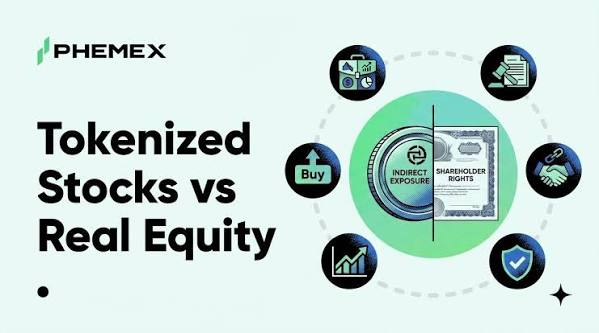
Tokenized stocks are blockchain-based representations of equities, while real stocks are actual shares held through regulated brokers. Real stocks usually offer stronger ownership rights, dividend entitlement, voting privileges, regulation, and investor protection. Tokenized stocks may offer flexibility, but can carry issuer, custody, and regulatory risks.
Key Takeaways
- Ownership Structures Vary: Real stocks offer guaranteed, legally protected ownership of a company. Tokenized stocks provide price exposure that depends heavily on how the issuer structures the token.
- The RWA Boom: Real-World Asset (RWA) tokenization is gaining massive momentum as major financial firms explore blockchain-based capital markets, though regulatory frameworks remain fragmented.
- Safeguards Matter: Real stocks continue to offer the strongest investor protections, direct shareholder benefits, and established legal recourse.
The lines between traditional finance and cryptocurrency have officially blurred. As institutional interest in blockchain technology reaches an all-time high, everyday investors face a new choice: should you stick with traditional equity markets, or move into blockchain-native alternatives?
Understanding what you actually own has become critical. While tokenized stocks and real stocks provide exposure to the exact same companies, they differ significantly in ownership rights, dividends, regulation, and investor protections.
Tokenized Stocks vs Real Stocks: Key Differences at a Glance
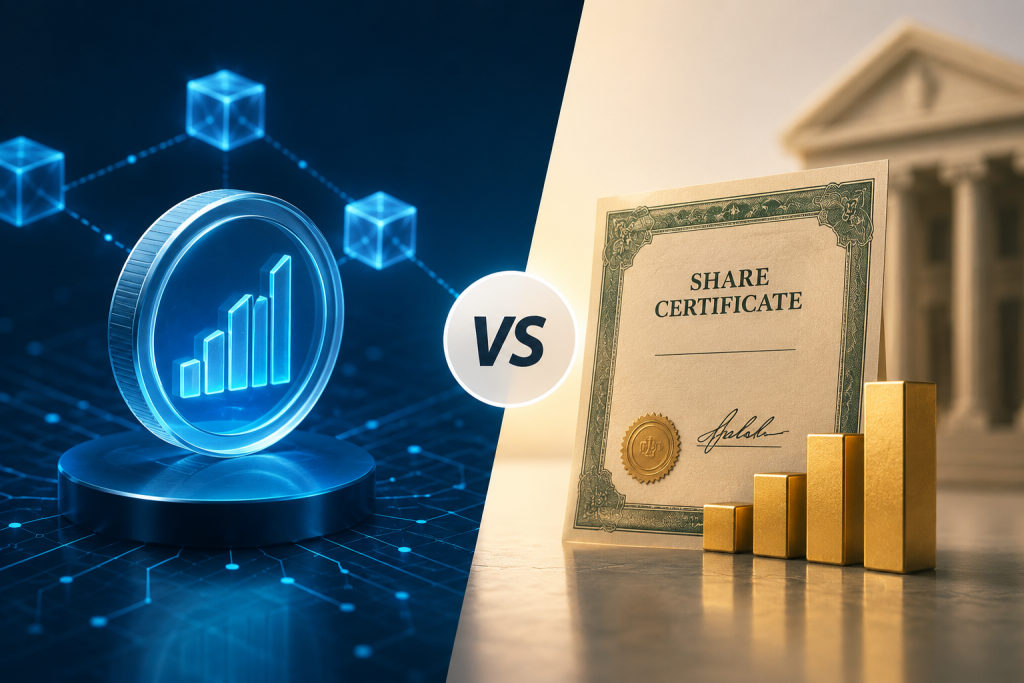
Before diving into the mechanics, let’s look at how these two asset classes compare across core investment features:
| Feature | Tokenized Stocks | Real Stocks |
| Ownership Rights | Varies by issuer (often derivative) | Direct or broker-backed legal ownership |
| Dividends | Not always guaranteed; depends on the platform | Eligible for full distribution |
| Voting Rights | Often limited or unavailable | Available to direct shareholders |
| Regulation | Emerging and fragmented | Well-established (e.g., SEC, FINRA) |
| Trading Hours | Often extended or 24/7 | Standard market hours (e.g., 9:30 AM–4:00 PM EST) |
| Settlement | Instantaneous blockchain-based | Traditional brokerage system (T+1) |
| Investor Protection | Platform-dependent; smart contract risk | Strong regulatory safeguards (e.g., SIPC) |
Why Tokenized Stocks Are Gaining Attention in 2026
The explosion of interest in tokenized equities isn’t an accident. It is driven by the massive growth of the Real-World Asset (RWA)
Major financial firms have embraced this change to lower operational friction. For retail investors, tokenization introduces two massive benefits: fractional ownership and faster settlement
What Are Tokenized Stocks and How Do They Work?
Tokenized stocks are digital tokens created on a blockchain that track the value of public equities. They generally fall into two categories:
- Asset-Backed Tokens: The issuing platform purchases actual shares of the stock and holds them with a custodian. They then mint a 1:1 digital token representing those shares.
- Synthetic Tokens: These tokens use smart contracts to mirror the price movements of a stock without owning the underlying asset. They act more like derivatives or contracts for difference (CFDs).
The Benefits
- Extended Trading Access: Crypto markets never sleep, allowing users to trade tokenized equity exposure outside standard Wall Street hours.
- Global Accessibility: Investors in developing markets who face severe geographic and onboarding barriers with traditional U.S. brokers can access global markets seamlessly via on-chain assets.
The Risks
- Regulatory Uncertainty: Because global frameworks are still emerging, some tokenized products have faced sudden geographic restrictions or crackdowns from regulators like the European Union.
- Custody and Counterparty Risk: If the platform issuing the synthetic token or holding the underlying asset goes under, investors can face severe capital losses.
What Are Real Stocks and Why Do Investors Still Prefer Them?
Real stocks represent true equity ownership in a corporation. When you buy a share of a company through a regulated broker, your name (or your broker’s name on your behalf) is recorded on the company’s official registry.
Key Advantages
- Direct Ownership & Corporate Actions: You possess true legal rights. If the company splits its stock or undergoes a merger, your rights are firmly protected by corporate law.
- Dividend Eligibility: Real shareholders are legally entitled to their portion of distributed corporate profits.
- Established Investor Protections: In major markets like the U.S., brokerages are backed by stringent regulatory bodies and frameworks like the Securities Investor Protection Corporation (SIPC), which protects consumer funds up to $500,000 if a broker fails.
Traditional Limitations
Despite these protections, the traditional system suffers from market-hour restrictions, complex onboarding processes for non-resident investors, and high cross-border wire transfer fees.
Ownership, Liquidity, and Trading Costs
For long-term investors, the choice between these two assets comes down to structural integrity. If you hold a synthetic tokenized stock, you have no legal relationship with the actual company, you are completely reliant on the platform’s stability.
On the other hand, the trading experience varies heavily by cost. While tokenized stocks boast instant blockchain settlement and extended trading hours, they can sometimes suffer from wider price spreads and thin liquidity during off-market hours.
Fortunately, the industry is shifting toward hybrid ecosystems that solve these bottlenecks.
The Market Shift: Forward-thinking crypto platforms are actively moving past basic synthetic assets. For instance, the global platform MEXC recently launched its RealStocks feature. To better understand how this bridges traditional equity and Web3, you can read more about it in the guide: What Is RealStocks?. Instead of offering speculative synthetic tokens, MEXC enables eligible global users to buy real U.S. shares through their licensed broker partner, Atomic Vaults.
This model blends the best of both worlds: investors trade using stablecoins like USDT within a familiar crypto interface, but they get genuine underlying market liquidity, broker-backed ownership, and eligibility for real dividend distributions. To accelerate adoption, platforms like MEXC have even introduced zero-fee stock trading campaigns, specific tracking pairs like MU USDT for targeted market exposure, and access to pre-IPO opportunities (like their recent $173 million SpaceX Launchpad subscription) alongside their traditional crypto products.
Will Tokenized Stocks Replace Real Stocks?
Wall Street and the crypto industry are not fighting; they are integrating. We are highly unlikely to see real stocks disappear. Instead, the future points toward a coexistence where traditional equity ownership structures are upgraded using blockchain rails.
Regulatory challenges remain the largest hurdle for pure on-chain tokenized equities. Until global regulators establish a unified framework for cross-border tokenized securities, traditional broker-backed ownership models—and hybrid crypto-to-broker ecosystems—will remain the gold standard for secure capital allocation.
Conclusion: Which Is Right for You?
Choosing between these models depends entirely on your strategy:
- Tokenized stocks are highly convenient for short-term traders looking for 24/7 market exposure, fractional accessibility, and instant blockchain settlement.
- Real stocks (or hybrid broker-backed models like MEXC RealStocks) are the superior choice for long-term investors who prioritize secure legal asset protections, institutional liquidity, and guaranteed dividend payouts.
Before investing your hard-earned capital, always ask: Who is holding the underlying asset, what fees apply after the promotional zero-fee periods end, and do I legally own a share or just a digital promise?
Frequently Asked Questions
Are tokenized stocks backed by real shares?
Not always. Asset-backed tokenized stocks are tied 1:1 to real shares held by a custodian. However, synthetic tokenized stocks are only derivatives that track price movements without owning the actual underlying equity.
Can tokenized stocks pay dividends?
It depends entirely on the issuer. Pure synthetic tokens rarely pass down dividends. However, modern hybrid models, such as MEXC’s RealStocks product, route orders through licensed brokers to ensure users receive their applicable dividend distributions directly in USDT.
Do tokenized stocks give investors voting rights?
In the vast majority of cases, no. Voting rights are typically stripped away in tokenized formats unless the platform has built a specific decentralized governance mechanism to pass those votes through to the underlying corporation.
Can I buy real U.S. stocks using USDT or other cryptocurrencies?
Yes. Through modern cross-asset platforms, you can use your USDT balances to execute trades on real U.S. equities during standard Nasdaq and NYSE trading sessions, bypassing traditional fiat wire transfers.
