
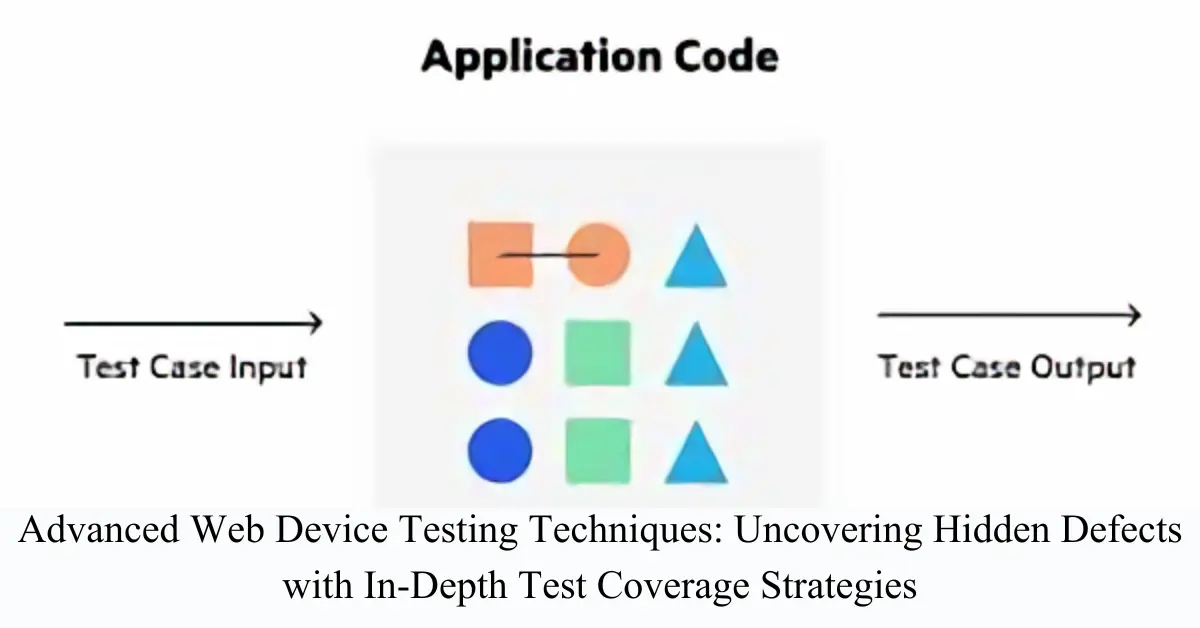
In an era where digital mediums dominate our everyday lives, ensuring that online gadgets run smoothly and perform well is critical. The progress of contemporary technology has resulted in new application usage patterns. For example, people today prefer to refrain from downloading and installing software on their smartphones. Instead, they want progressive web apps that can do all these jobs via the Internet. Web device testing is an essential component of the current web app development cycle since it ensures the consistency of these web apps.
The developers must perform these test cases on various devices with varied screen sizes, operating systems, and browser versions. Standard testing methods must frequently catch up in this dynamic environment, leaving significant flaws hidden beneath the surface. Thus, using modern web device testing approaches, developers may conduct full validation to discover and actively fix device-specific bugs.
What are Web Devices?
As the Internet of factors continues to extend, the range and capabilities of Internet gadgets evolve, imparting both possibilities and demanding situations for developers, testers, and users alike. Developers attempt to create like-minded applications and offerings with an ever-increasing array of gadgets. At the same time, testers face the complicated venture of ensuring steady overall performance and capability across various platforms.
Customers, meanwhile, navigate the complexities of virtual connectivity and user experience, searching for seamless integration and intuitive interfaces in their interactions with web devices. In this dynamic landscape, the importance of solid testing methodologies and in-depth insurance strategies cannot be overstated, as they are essential for uncovering hidden defects and ensuring the reliability and first-class quality of Internet gadgets and the experiences they deliver.
Whether it is the benefit of smartphones for on-the-go browsing, the immersive stories provided using smart TVs, or the efficiency gains enabled by connected IoT devices; web gadgets play a pivotal role in shaping how people interact with and enjoy the Internet.
What is Web Device Testing?
Web device testing is the process of understanding web application functionality, performance, and compatibility. The developers need to perform web device testing across multiple platforms and devices. With traditional testing practices, the developers can mainly focus on functional validation and cross-browser compatibility.
However, with web device testing, developers can go beyond this basic validation process to address advanced features like touch interactions, device orientation, performance optimization, and hardware capabilities.
Web device testing is a critical system aimed at comprehensively assessing Internet applications’ functionality, performance, and compatibility across numerous structures and gadgets. In contrast to conventional testing practices that focus on functional validation and pass-browser compatibility, Internet device testing delves deeper into advanced functions, including contact interactions, tool orientation, overall performance optimization, and hardware capabilities.
By incorporating those superior testing strategies, developers can ensure that their packages deliver a steady and smooth consumer experience across diverse device ecosystems. This technique enables them to become aware of and deal with potential troubles related to particular device functionalities or hardware configurations, ultimately enhancing the general quality and reliability of the software.
Advanced Web Device Testing Techniques
Following are some of the most advanced types of techniques that can help the developers and testers provide the optimal level of user engagement for web device testing, irrespective of the device or platform:
● Responsive Design Testing
All users can now use a vast range of devices like smartphones, tablets, and desktops to access web apps and perform their desired actions. In the worst situation, a poor user experience or frequent app crashes would arise from the web application’s inability to conform to the screen size and resolution of all these devices when using standard design techniques.
So, the developers must adopt a responsive web design, allowing the application to adjust automatically depending on the screen size, resolution, or display orientation. Implementing comprehensive, responsive design testing is also essential to ensure that the website performs as intended.
Additionally, it aids in simulating various device attributes, such as aspect ratio, screen size, and pixel density, to help find layout errors and design problems. Testing responsiveness across multiple devices allows testers to optimize the application’s UI to ensure visual representation across the entire device spectrum.
● Device Emulation and Simulation
Using modern device emulators and simulators, testers can replicate the behavior of different devices within the software testing environment. Testers can test web apps using this emulation without needing to access every device physically. Some of the advanced emulation platforms include the Xcode simulator, Chrome DevTools Device Mode, and Android emulator. All of these names provide accurate representation of device software, hardware, and various forms of user interactions.
The developers and testers can create unique settings with these tools to select the screen size, orientation, resolution, and input methods they like. App-developing companies can simulate various real-world user scenarios using customization options that are tailored to their target users. Moreover, by emulating diverse environments, the testers can identify and solve device-specific issues at the earlier phases of the application development and testing life cycle.
● Implementing Touch and Gesture Testing
Since most modern mobile devices use touch screens for user interactions, the developers must test touch and gesture interactions to ensure proper engagement on the web application—advanced touch and gesture testing tools, like TouchTest.io. Testers can simulate touch events with Hammer.JS and Appium. The most frequently replicated activities involve pinch zooming, swiping, scrolling, and other touch-based interactions on various platforms and gadgets.
The developers can also access extensive touch event validation and emulation features using these tools. With this approach, app companies can ensure consistent behavior and responsiveness on touchscreen displays. So, by systematically testing touch interactions, the testers can enhance the accessibility and usability of web apps on all modern tablet and mobile devices.
● Performance Profiling on Mobile Devices
Most current cellular gadgets have limited memory, power, and network bandwidth capabilities compared to their computer counterparts. So, developers and testers need to use performance profiling software like WebPageTest, Google Lighthouse, and Safari Web Inspector to evaluate the overall performance of internet apps on mobile gadgets.
These tools help the testers to measure critical performance metrics. The most important ones include page load time, resource utilization, rendering speed, and network latency. All these parameters provide actionable insights for performance optimization.
● Cross-Platform Testing Frameworks
With cross-platform testing frameworks, the application testers can verify the functioning of web apps across multiple device platforms and operating systems. Moreover, advanced cost platform testing frameworks like TestProject, Appium, and Xamarin Test Cloud allow the developers to execute automated testing of web apps on multiple mobile platforms like Android, iOS, Windows, and others.
So, by using these frameworks, the testers can provide cross-platform compatibility testing capabilities to validate web apps across multiple device ecosystems. Furthermore, by automating cross-platform testing, the developers can increase test coverage, ensure consistent functionality, and accelerate testing cycles. Testers can quickly roll out high-quality web apps by properly running these test cases.
● Progressive Web App (PWA) Testing
With progressive web apps, the testers can combine the capabilities of native and web mobile apps. This combination offers offline support, app-like web experiences, and push notifications. Furthermore, Workbox, Lighthouse, and PWABuilder—advanced PWA testing tools—allow the developers to test every feature and capability of the application thoroughly.
With these tools, the testers can verify the critical functioning of multiple PWA applications, including caching strategies for offline capabilities, service worker functionality, and web manifest compliance. The developers can also guarantee the best possible speed, user engagement, and dependability across various platforms and devices by thoroughly testing PWAs.
LambdaTest for Web Device Testing
A cloud-based platform called LambdaTest. It is an AI-powered test orchestration and execution platform that lets you run manual and automated tests at scale with over 3000+ real devices, browsers, and OS combinations. Provides an entire online tool for testing, permitting testers to get substantial device coverage.
Testers may additionally make sure their websites feature and are feasible in a selection of conditions using their usage to access a wide variety of proper browsers, operating structures, and gadgets. With the help of the platform’s automated and manual testing, testers can correctly debug and stumble on issues by interacting with websites across various browsers and devices.
Here is a way to use LambdaTest for web device testing by following the steps given below:
- Register and sign in: Create an account first on the LambdaTest website. To use the testing platform after registering, log in.
- Select Your Testing Environment: Various browsers, running structures, and hardware are to be had for testing. Choose the desired combination of a working device and browser from the list of possibilities.
- Choose Device: It lets you test websites on virtual computers and actual hardware. Select the device you wish to test on, whether a tablet, smartphone, laptop, or desktop.
- Put Your Website Online: You have two options: upload your web application straight to LambdaTest or input the website URL you wish to test. It enables you to test websites protected by a firewall or currently under development.
- Start Testing: It will run the chosen browser and device combination once your website is uploaded or the URL is provided. The website allows you to interact with it in the same way as a local computer.
- Debugging and troubleshooting: To assist you in locating and resolving problems, it offers a variety of debugging tools, including developer tools, screenshots, and video recording. You may take screenshots in various viewports, record videos of your testing sessions, and investigate HTML, CSS, and JavaScript.
- Cooperation and Sharing:Sharing test sessions and results with team members is made possible using it.
- Automated Testing: This platform is also compatible with popular frameworks, like Selenium and Appium, for automation testing. With LambdaTest’s cloud infrastructure, you can create automated test scripts in your favorite programming language and run them.
- Integration with CI/CD Tools: Jenkins, Travis CI, CircleCI, and other CI/CD tools are just a few tools that LambdaTest easily interfaces with. It enables you to automate testing and deployment of web device testing into your current CI/CD workflows.
LambdaTest provides a smooth-to-use and effective platform for testing online devices on various browsers, running systems, and hardware. Whether you are troubleshooting or doing computerized or manual testing, it has the functions and gear you need to guarantee a smooth and uniform user experience on all gadgets.
Conclusion
In the modern, various digital atmospheres, implementing thorough web device testing methodologies is vital to guaranteeing the fulfillment and efficacy of websites. Through strategies like accessibility exams, working device testing, browser compatibility tests, and responsive layout testing, organizations can ensure that their websites offer a steady and most appropriate consumer experience across various systems, browsers, and gadgets.
To guarantee flawless operation and performance, testers may conduct great tests, spot possible problems, and debug effectively with technology like LambdaTest and Selenium.
