
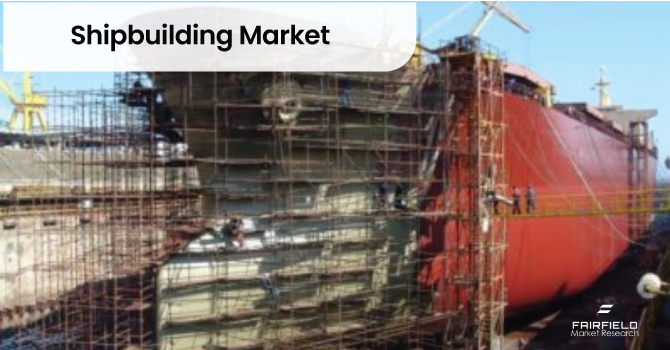
The shipbuilding industry is poised for significant evolution over the next decade, driven by various trends and market dynamics. According to Fairfield Market Research, the global shipbuilding market is set to experience robust growth, fueled by increasing international seaborne trade, advancements in ship technology, and rising demand for eco-friendly ships.
Growth Drivers and Market Dynamics
- Increasing International Seaborne Trade Maritime transport remains the backbone of global trade and industrialization. With around 80% of global trade transported by sea, the demand for efficient and cost-effective marine transportation is higher than ever. This surge in trade is expected to drive the demand for new ship constructions, particularly in developing regions where economic growth is rapid.
- Advancements in Ship Technology The development of innovative and environmentally friendly ships is a key trend in the shipbuilding market. The introduction of liquefied natural gas (LNG) powered vessels and electric ships is gaining momentum, driven by stringent environmental regulations and the need for sustainable practices. These advancements not only reduce emissions but also improve fuel efficiency, positioning the industry towards a greener future.
- Dominance of the Asia Pacific Region Asia Pacific, particularly China, Japan, and South Korea, continues to dominate the shipbuilding industry. China, in particular, has solidified its position as a global leader, receiving over half of all shipbuilding orders. This region’s focus on external trade and its strong manufacturing capabilities contribute significantly to market growth.
Key Market Segments
- Commercial Ships Commercial ships, including tankers, cargo ships, and bulk carriers, are expected to hold the largest market share. The rise in globalization and flourishing international trade will drive the demand for these vessels, which are essential for transporting goods and commodities across the globe.
- Specialized Vessels The construction of specialized vessels such as ferries, cruise ships, and superyachts is also on the rise. Europe, in particular, leads in the production of these sophisticated boats, driven by high demand for passenger and luxury travel.
- Defense and Energy Vessels In North America, the demand for defense vessels and energy transportation ships is increasing, supported by high public funding and the strategic importance of these vessels. The U.S. Navy’s investment in advanced defense ships is a significant contributor to this segment.
Future Projections and Competitive Landscape
The shipbuilding market is characterized by strong forward and backward linkages with other industries, including steel, electronics, and engineering. This interdependence drives innovation and growth across the supply chain. Additionally, key players like Hyundai Heavy Industries, Daewoo Shipbuilding & Marine Engineering, and China Shipbuilding Group are continuously investing in new technologies and expanding their capacities to meet the growing demand.
The next decade for the shipbuilding industry looks promising, with significant growth anticipated due to rising global trade, technological advancements, and increased demand for specialized and eco-friendly vessels. Regions like Asia Pacific will continue to lead, while Europe and North America will also play crucial roles in driving innovation and market expansion.
For more detailed insights and comprehensive analysis, refer to the Fairfield Market Research report on the Shipbuilding Market.
